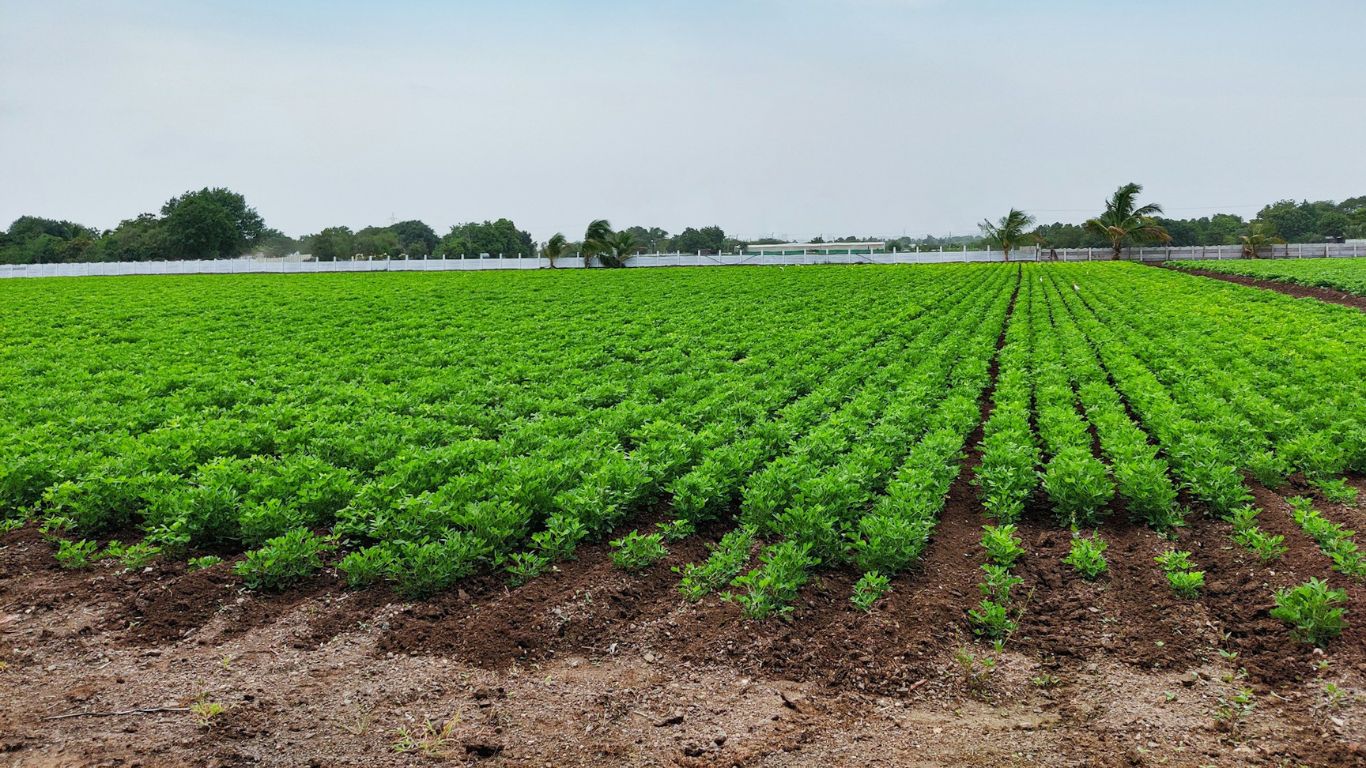
Sustainable farming isn't just for large commercial operations—small-scale farmers can implement powerful practices that protect the environment, reduce costs, and increase long-term productivity. At Joles Farm, we've developed and refined sustainable techniques specifically suited to small plots in Kenya's climate, proving that even compact farms can be highly productive while building rather than depleting natural resources.
Whether you're farming a quarter-acre plot in Athi River or managing a few acres in Kibos, these practical sustainable strategies will help you grow more food with less water, fewer inputs, and greater resilience to climate variability. Sustainability isn't about sacrifice—it's about smarter farming that benefits both your bottom line and the land that sustains you.
Sustainable farming is not a luxury or an idealistic dream—it's the most economically sound approach for small farmers. By working with natural systems rather than against them, we reduce input costs, increase yields, and build soil fertility that compounds over time.
Water Conservation: Every Drop Counts
Water scarcity is one of the greatest challenges facing Kenyan farmers, especially during prolonged dry seasons. Sustainable water management begins with understanding that conventional irrigation methods waste enormous amounts of water through evaporation, runoff, and inefficient application. At Joles Farm, we've cut water usage by over 60% compared to traditional methods while actually improving crop performance through strategic conservation practices.
Drip irrigation is our most valuable water conservation tool. This system delivers water directly to plant root zones through a network of tubes and emitters, eliminating the waste associated with overhead sprinklers and flood irrigation. A small-scale drip system can be installed on as little as 100 square meters for a modest investment, paying for itself within a single season through water savings and increased yields. We've seen vegetable production increase by 30-50% when switching from overhead irrigation to drip systems, while water consumption drops dramatically.
Mulching: The Multi-Purpose Miracle
Mulch is any material spread on the soil surface to conserve moisture, suppress weeds, and moderate soil temperature. This simple practice delivers remarkable benefits on small farms. We apply 5-10 centimeters of organic mulch around all our crops, using materials like dried grass clippings, crop residues, and shredded leaves—all freely available on most farms.
- Mulch Reduces Water Evaporation by 50-70%, Cutting Irrigation Needs Substantially
- Weed Suppression from Mulch Eliminates Hours of Manual Weeding Labor
- Soil Temperature Moderation Protects Plant Roots from Extreme Heat and Cold
- Organic Mulches Decompose Over Time, Adding Organic Matter and Nutrients to Soil
- Mulch Prevents Soil Erosion During Heavy Rains, Protecting Topsoil and Nutrients
- Improved Soil Structure and Microbial Activity Under Mulch Enhance Plant Health
We've observed that mulched vegetable beds require half the watering frequency of bare soil beds, while plants show stronger growth and greater disease resistance. The initial labor investment in spreading mulch is recouped many times over through reduced weeding and watering throughout the season.
Rainwater Harvesting for Small Farms
Every roof is a potential water collection surface. A simple calculation reveals that a 50 square meter roof collects approximately 50,000 liters of water during Kenya's long rains—enough to irrigate a substantial vegetable garden for months. At Joles Farm, we've installed rainwater harvesting systems that capture runoff from all buildings and structures, storing it in tanks and ponds for use during dry periods.
Small farmers can start with a single 1,000-liter tank connected to a shed or house roof, gradually expanding capacity as resources allow. The captured water is perfect for irrigation, eliminating dependency on municipal supplies or unreliable boreholes. During rain seasons, our harvested water allows us to maintain production even when droughts affect surrounding areas, providing both food security and market advantage.
Building Soil Health Through Composting
Healthy, fertile soil is the foundation of sustainable agriculture, and composting is the most cost-effective method for small farmers to build soil organic matter. Every farm generates organic waste—crop residues, kitchen scraps, animal manure, and weeds pulled from gardens. Rather than burning or discarding these materials, we transform them into nutrient-rich compost that replaces expensive synthetic fertilizers.
Our simple three-bin composting system processes all farm organic waste continuously. Fresh materials go into the first bin, partially decomposed material moves to the second bin for finishing, and fully mature compost in the third bin is ready for field application. This system produces finished compost year-round with minimal effort—just occasional turning and moisture management. A small farm can easily produce several tons of high-quality compost annually, enough to fertilize extensive vegetable gardens completely organically.
Cover Crops and Green Manures
During periods when land isn't producing cash crops, cover crops keep soil covered and productive rather than bare and eroding. We plant quick-growing legumes like lablab beans, cowpeas, or mucuna during short breaks between main crops. These plants fix atmospheric nitrogen, add organic matter when turned into soil, prevent erosion, suppress weeds, and break pest and disease cycles.
After 6-10 weeks of growth, we cut cover crops and incorporate them into the soil as green manure, or we leave them as surface mulch. Either way, the following cash crop benefits from improved soil nitrogen, better structure, and enhanced microbial activity. This practice dramatically reduces or eliminates the need for purchased fertilizers while improving soil health with each rotation cycle.
Minimal Tillage for Soil Conservation
Conventional farming emphasizes deep plowing that disrupts soil structure, kills beneficial organisms, and accelerates erosion. Sustainable farming minimizes tillage, preserving soil structure and the complex ecosystems that support plant health. At Joles Farm, we practice minimal tillage, disturbing soil only where we're planting and leaving most of the ground covered and intact.
For small plots, this might mean using a hoe to create individual planting holes rather than turning over entire beds. The undisturbed soil maintains its structure, water infiltration capacity, and biological activity. Over time, minimal tillage builds soil organic matter levels, improves water retention, and reduces labor requirements—a perfect combination for resource-limited small farmers.
Crop Diversification and Integrated Farming
Small farms have a distinct advantage over large monocultures: the ability to grow diverse crops that support each other and spread risk. Rather than depending on a single crop that might fail due to pests, disease, or market fluctuations, we cultivate multiple vegetables, fruits, herbs, and even incorporate small livestock into our system.
Our integrated approach combines vegetables with fruit trees providing shade and windbreaks, chickens that control pests and provide manure, and fish ponds that supply both protein and nutrient-rich water for irrigation. This diversity creates resilience—if one enterprise underperforms, others compensate. The different components support each other: chickens eat pests and weeds while fertilizing soil, fish waste fertilizes vegetables, and crop residues feed livestock.
Renewable Energy on Small Farms
Energy costs can significantly impact small farm profitability, particularly for irrigation pumping and post-harvest processing. We've invested in solar power systems that eliminate ongoing fuel costs while providing reliable, clean energy. A modest solar installation can power drip irrigation pumps, electric fencing, and processing equipment, paying for itself through fuel savings within 3-5 years.
Solar water pumping is particularly valuable for small farms in areas with unreliable electricity. A solar pump can lift water from boreholes, rivers, or storage tanks to irrigate crops throughout the day, with zero operating costs once installed. Kenya's abundant sunshine makes solar energy an obvious choice for sustainable small-scale farming.
The Economics of Sustainability
Sustainable practices aren't just environmentally responsible—they make excellent financial sense for small farmers. By reducing dependency on purchased inputs like synthetic fertilizers, pesticides, and fuel, sustainable farming dramatically lowers operating costs. The initial investment in systems like drip irrigation, composting bins, or rainwater tanks pays returns for many years, while practices like mulching and cover cropping cost virtually nothing but labor.
At Joles Farm, our transition to fully sustainable practices reduced input costs by over 70% while increasing yields by 40%. Our produce commands premium prices because customers recognize superior quality and support our environmental practices. Most importantly, our soil fertility improves each year rather than depleting, ensuring long-term productivity that extractive farming methods cannot match.
Every small farmer in Kenya can implement these sustainable practices, regardless of farm size or resources. Start with one or two techniques, master them, then gradually expand your sustainable practices. The land will reward your stewardship with abundance, resilience, and productivity that grows stronger over time. At Joles Farm, we're proof that sustainable farming isn't just possible on small Kenyan farms—it's the smartest path to profitability and food security for generations to come.